CIPC Steps Up Enforcement: Non-Compliance Now Comes with Public Exposure.
The Companies and Intellectual Property Commission (CIPC) is strengthening its approach to statutory compliance, elevating what was often treated as an administrative task into a clear regulatory and reputational risk. CIPC has confirmed that it will publish the names of entities that fail to comply with compliance notices issued under section 171 of the Companies Act 71 of 2008, where those notices have not been set aside or amended by the Companies Tribunal. Affected entities will also have their status updated on official disclosure certificates to reflect “Failed to comply with the Compliance Notice”.

This makes non-compliance visible to banks, customers, counterparties, regulators, and potential investors. As a result, compliance failures can directly affect commercial credibility.
The enforcement approach is supported by enhanced monitoring under section 187 of the Act and improved digital systems that enable CIPC to identify repeated or unresolved non-compliance. Where notices are ignored, CIPC may approach a court to impose administrative fines of up to 10% of turnover or R1 million, whichever is higher.
For directors, compliance filings are now formal legal obligations. Annual returns, director information, registered addresses, and related disclosures must be accurate and up to date. Increased regulatory transparency means that delays or omissions can escalate quickly into broader financial, governance, and reputational risks. Active compliance management is therefore a core responsibility for boards and directors.
Operation Vulindlela Q4 2025/26: Progress on Structural Reform Continues.
The latest Operation Vulindlela progress report highlights continued momentum in South Africa’s structural reform agenda, with a focus on addressing constraints to growth, investment, and service delivery. Operation Vulindlela run jointly by the Presidency and National Treasury—oversees a broad set of priority reforms across key sectors, including electricity, freight logistics, water, and digital infrastructure. The Q4 report indicates that progress is increasingly shifting from policy design to implementation, with reforms beginning to translate into measurable outcomes.
In the electricity sector, regulatory changes and market reforms have supported around 18GW of private generation capacity, equivalent to roughly a quarter of South Africa’s installed capacity. While a significant portion of this capacity is still under development, it represents a substantial pipeline of new supply and private investment. These reforms are central to improving energy security and enabling more reliable power provision over time.
In freight logistics, the report points to ongoing reforms aimed at restructuring the sector and improving performance. This includes steps to enable greater private sector participation in rail and port operations, alongside efforts to strengthen institutional capacity and operational efficiency within existing state-owned entities. The objective is to reduce bottlenecks, improve reliability, and lower the cost of moving goods key constraints on exports and economic growth.
The report further highlights developments in water and local government reform, particularly efforts to strengthen institutions and improve service delivery. These remain critical for addressing infrastructure backlogs and supporting economic activity at the local level.
Across sectors, a key theme is improved coordination and execution. Operation Vulindlela continues to play a central role in resolving implementation bottlenecks and aligning institutions to ensure that reforms move beyond policy commitments.
Overall, the report points to steady, though uneven, progress. While challenges remain, particularly in complex sectors, the reforms underway are aimed at building a more efficient and resilient economic framework over the medium term.
SARB Monetary Policy Review: Inflation Risks Rise Amid Global Uncertainty.
The latest Monetary Policy Review from the South African Reserve Bank highlights a more uncertain economic environment, with inflation risks shifting to the upside despite recent progress in stabilising prices. Inflation reached 3% in February 2026, aligning with the Bank’s revised target. However, the outlook has become more complex. While inflation is expected to rise in the near term, it is still projected to remain within the target range and return to the 3% objective by late 2027.

A key driver of this shift is global volatility, particularly energy-related shocks linked to geopolitical tensions. Rising prices for oil and other inputs have interrupted the recent trend of declining inflation and increased uncertainty around future price pressures. As a net importer of fuel, South Africa remains especially exposed to these developments.
The Review emphasises that monetary policy must remain cautious in this context. While earlier expectations pointed to potential interest rate cuts, the current environment has narrowed the scope for easing. Instead, policy is likely to remain data-dependent, with a focus on anchoring inflation expectations and maintaining credibility.
Importantly, the Bank outlines a range of scenarios. In its baseline, inflation pressures ease over time as global conditions stabilises. However, more severe scenarios such as prolonged geopolitical disruptions could lead to higher inflation and tighter monetary policy.
Overall, the Review signals a shift from a relatively stable inflation environment to one characterised by heightened external risks. For businesses and households, this implies continued uncertainty around interest rates, input costs, and economic conditions over the medium term.
Why Boards Need a Combined Governance and ESG Framework.
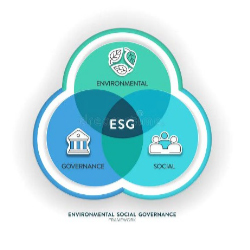
Boards are operating under increased scrutiny, with stronger regulatory enforcement, rising stakeholder expectations, and greater personal accountability for directors. In this environment, it is no longer sufficient to rely on high-level commitments. Boards are expected to demonstrate structured decision-making, clear governance processes, and effective oversight of environmental, social, and governance (ESG) risks. ESG provides a practical framework for understanding risks that are not always captured in traditional financial reporting. Environmental factors such as climate exposure and resource constraints, social considerations including labour practices and stakeholder relationships, and governance issues such as ethics and oversight can all have direct implications for performance, reputation, and long-term sustainability.
Investor expectations and regulatory developments have reinforced this shift. ESG metrics are increasingly used in due diligence and reporting, influencing access to capital and assessments of risk. At the same time, disclosure requirements and sustainability frameworks are becoming more structured, requiring boards to take a more active and informed role in oversight.
For this reason, ESG cannot be treated separately from core governance. Strong governance frameworks provide the structure through which ESG risks are identified, assessed, and managed. Without this, ESG initiatives risk being fragmented or disconnected from strategy. Conversely, governance that does not incorporate ESG considerations is increasingly seen as incomplete.
An integrated approach brings these elements together. It ensures that ESG considerations are embedded in board processes, linked to strategy, and supported by clear accountability and reporting. This includes defining roles and responsibilities, establishing oversight mechanisms, identifying material risks, and tracking performance through appropriate indicators.
In practice, this integration strengthens both governance and risk management. It enables boards to demonstrate that oversight is active and informed, supports more consistent decision-making, and provides a clearer basis for engaging with regulators, investors, and other stakeholders.
EMP 501 Reconciliation Deadline.
This serves as a reminder that your bi-annual Employer Reconciliation Declaration (EMP501 Reconciliation) is due for submission to SARS by no later than 29 May 2026.
Late submissions will impose penalties (equal to 1% of the year’s PAYE, for each month the return is outstanding and up to 10% of the year’s PAYE).
It is important to submit accurate reconciliations as a SARS rejection can create an additional administrative burden for your company.
Should you require our assistance in this regard, please contact our offices.